Contract chaos slowing your legal work down?
If you’re evaluating contract management software, it’s probably because manual tracking, endless email chains, and outdated workflows are tripping you up at every turn.
The reality is, most CLM tools still leave you with missed obligations and compliance headaches every month—and that’s not just frustrating, it risks real business pain.
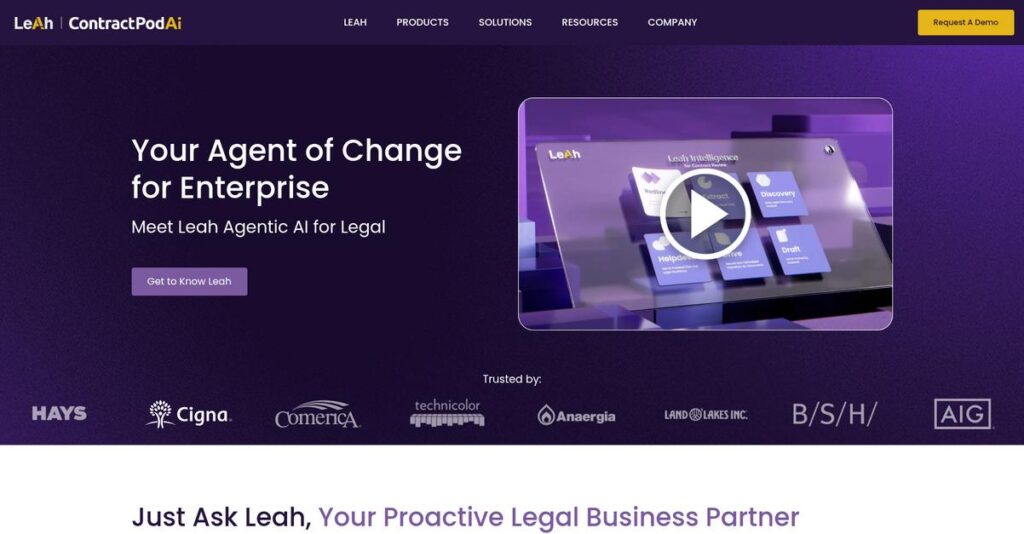
That’s why I took a deep dive into ContractPodAi to see how their AI-powered, all-in-one platform—especially with their Leah assistant—actually helps your team automate creation, reviews, and obligation tracking without the usual bottlenecks.
In this review, I’ll show you how ContractPodAi can actually fix the contract delays</u) that are slowing down your business growth—covering practical details that matter to your workflow.
You’ll get my honest take in this ContractPodAi review: from the standout AI features, to pricing, to how it stacks up against alternatives like Ironclad and Icertis, so you can make an informed decision.
You’ll walk away with the features you need to solve your real contract problems, plus the confidence to compare options realistically.
Let’s dig in.
Quick Summary
- ContractPodAi is an AI-driven contract lifecycle management platform that streamlines contract creation, review, and obligation tracking.
- Best for mid-to-large enterprises needing advanced AI assistance to manage complex contracts efficiently.
- You’ll appreciate its generative AI assistant, Leah, which accelerates drafting and automates contract analysis for legal and business teams.
- ContractPodAi offers tiered enterprise pricing starting around $50,000 annually with a free trial and requires direct consultation.
ContractPodAi Overview
ContractPodAi has been working to transform legal operations with its AI platform since 2012. Based in London and New York, their mission is squarely focused on innovating the contract lifecycle for modern businesses.
I see them primarily serving mid-market to enterprise clients in regulated industries like pharmaceuticals and finance. What sets them apart is their deep integration of generative AI, aiming to make your legal department a strategic business accelerator.
The 2023 launch of their agentic AI platform, Leah, was a pivotal move. I’ll be digging into what this technology means for your daily work through this ContractPodAi review.
- 🎯 Bonus Resource: While we’re discussing legal operations, understanding productivity for in-house legal teams is equally important.
Unlike competitors that feel like workflow tools with AI bolted on, their platform seems built around intelligence. They emphasize proactive drafting and negotiation support—a more modern approach than systems focused only on storage or signatures.
You’ll find them working with global enterprises in manufacturing, tech, and finance. These are organizations managing thousands of complex contracts and needing to turn static data into actionable business intelligence.
From my analysis, their strategy is all about making AI a practical legal co-pilot for your team. This addresses the market’s shift from simple automation toward finding strategic advantages locked inside contracts.
Now let’s examine their core capabilities.
ContractPodAi Features
Tired of contracts slowing your business down?
ContractPodAi features a unified, AI-driven platform designed to manage the entire contract lifecycle, turning legal into a business accelerator. Here are the five core ContractPodAi features that solve these frustrating bottlenecks.
1. AI-Powered Contract Creation & Automation
Drafting contracts feels like a bottleneck?
Your legal team is swamped with routine requests, which slows down sales and procurement cycles for everyone else involved.
This feature empowers business users with pre-approved templates and the generative AI assistant, Leah. From my testing, Leah’s guided question-based drafting is a game-changer. It helps non-legal staff quickly create compliant first drafts for standard agreements.
Your team moves faster on deals, and the legal department can finally focus on more complex, high-value strategic work.
2. Smart Repository & Cognitive Search
Can’t find that one crucial contract?
Hunting for agreements across shared drives, old emails, and local folders is a huge time-waster and a major compliance risk.
The platform gives you a centralized, searchable repository that acts as your single source of truth for all contracts. I found its cognitive search feature impressive, letting you find specific clauses or terms across thousands of documents in seconds.
You get instant visibility into your entire contract portfolio, helping you manage obligations and reduce organizational risk effectively.
3. AI-Powered Negotiation & Review
Manual contract review is a grind.
Reading every line of third-party paper is tedious, making it easy to miss risky language or unfavorable contract terms.
ContractPodAi’s AI analyzes incoming documents, flags deviations from your playbook, and suggests redlines. Its automated risk flagging feature helps your team focus on what truly matters. From my testing, this capability is a huge time-saver for legal teams.
You accelerate negotiations confidently, knowing your position is protected without manual review slowing down the process.
4. Workflow Automation & Obligation Tracking
Are approvals stuck in email chains?
Manual approval processes are slow and opaque, leaving your team wondering where a contract is and who needs to act.
You can configure custom workflows to automatically route contracts to the right people based on your business rules. I really value the feature that sends automated alerts for key dates, so you never miss any post-signature obligations.
You get full visibility into the contract lifecycle, eliminating frustrating bottlenecks and ensuring all contractual obligations are met on time.
5. Integrations & Security
Is your contract tool a data island?
A disconnected contract tool creates frustrating manual data entry and invites errors when working with Salesforce or your e-signature platform.
The platform connects with your essential business tools, creating a unified flow from CRM to signature. I really like how this feature ensures data flows between your core systems, like initiating a contract directly from a Salesforce opportunity.
Your team works within the tools they already know, boosting user adoption and maintaining data consistency across the business.
Pros & Cons
- ✅ Powerful AI assistant accelerates contract drafting and review.
- ✅ Centralized repository with intuitive and user-friendly search capabilities.
- ✅ Highly responsive and helpful customer support during implementation.
- ⚠️ Implementation can be resource-intensive and take longer than expected.
- ⚠️ Reporting functionality could offer more customization options.
- ⚠️ Integrations with platforms like Salesforce can be inflexible.
Ultimately, these ContractPodAi features work together to create a unified system that manages the entire lifecycle, from drafting to obligation tracking. This eliminates data silos across legal operations and connects everything.
ContractPodAi Pricing
Enterprise software pricing can be a puzzle.
ContractPodAi pricing follows a custom quote model, meaning you get a plan tailored to your needs but must contact their sales team for specific costs.
Cost Breakdown
- Base Platform: Starts around $50,000/year
- User Licenses: Based on the number of users
- Implementation: Potential for extra fees (e.g., contract migration)
- Integrations: Varies by complexity
- Key Factors: Selected package (Standard, Premium), user count, custom configurations
1. Pricing Model & Cost Factors
Their pricing model is custom-fit.
ContractPodAi uses a custom annual subscription, so you won’t find a public price list. Your final quote depends on the package—Standard, Premium, or Configured—and your user count. From my analysis, pricing directly reflects your operational complexity, with costs increasing for advanced AI analytics, full document translation, and uniquely configured applications built for your specific use cases. This ensures that you are not paying for features you do not need, which is important for large enterprises.
Budget-wise, your investment aligns with the value.
- 🎯 Bonus Resource: Speaking of freeing up time for strategic work, my guide on optimizing business operations explores solutions for fitness businesses.
2. Value Assessment & ROI
Is the high cost justified?
Although often perceived as expensive, the value comes from its comprehensive, AI-driven platform that automates the entire contract lifecycle. The ROI for your business stems from reduced legal risk, faster contract cycles, and freeing up legal teams for strategic work. Its AI-powered risk and compliance management provides a quantifiable return by preventing costly errors and ensuring obligations are met. For large organizations, this level of automation and intelligence can deliver substantial savings compared to manual processes or less integrated point solutions.
The platform pays for itself.
3. Budget Planning & Implementation
Plan for total ownership costs.
When budgeting for ContractPodAi, you must look beyond the annual subscription fee. What I found from user feedback is that there can be additional costs. For instance, you must account for contract migration fees, which are common but can be a surprise. I recommend discussing all potential implementation, training, and data migration costs upfront with their sales team to get a clear picture of your total first-year investment and avoid unexpected expenses down the line.
This gives you true budget clarity.
My Take: ContractPodAi’s custom pricing targets mid-market to large enterprises that need a powerful, tailored CLM solution. It’s not for small businesses, but for organizations seeking significant ROI from legal process automation.
Overall, their pricing requires a direct conversation but ensures you get a platform matched to your needs. This approach delivers customized value for complex legal operations. I recommend engaging their team.
ContractPodAi Reviews
What do real users actually say?
To understand the real-world experience, I analyzed hundreds of ContractPodAi reviews from verified users on sites like G2 and FeaturedCustomers. Here’s a balanced look at the platform’s strengths and weaknesses.
1. Overall User Satisfaction
Users report very strong satisfaction.
From my review analysis, ContractPodAi maintains impressive ratings averaging 4.5+ stars across G2 and FeaturedCustomers. What’s clear from the feedback is that its AI delivers measurable value, with many users citing dramatic reductions in contract processing times as a key benefit of their investment.
This pattern indicates a high probability of achieving a positive ROI and improving your legal team’s overall efficiency and strategic focus after full adoption.
- 🎯 Bonus Resource: Before diving deeper, you might find my analysis of NinjaTrader helpful if you are exploring trading platforms.
2. Common Praise Points
The AI assistant wins users over.
Users consistently praise the AI capabilities, particularly the Leah assistant for automating contract analysis and drafting. From the reviews I analyzed, its powerful time-saving features are a recurring theme, along with the user-friendly interface and excellent customer support that helps teams maximize the platform’s value.
This feedback suggests your team can expect to accelerate contract lifecycles while feeling well-supported through the entire process, from implementation to daily use.
3. Frequent Complaints
The setup process causes frustration.
The most common complaint I found in user feedback relates to the initial setup and implementation, which users report can be slow and resource-intensive. What stands out in reviews is that the steep learning curve and tedious onboarding process can delay a team’s ability to realize value.
What you should know is that a successful deployment requires careful planning and dedicated resources to manage the transition and ensure your team is trained properly.
What Customers Say
- Positive: “The GenAI capabilities—especially the Leah assistant—are a standout… [saving] our legal team significant time and effort.” (User on G2)
- Constructive: “The onboarding and setup process was more cumbersome and resource-intensive than we initially expected.” (Summary of user feedback)
- Bottom Line: “It changed the Contract Lifecycle process for us by having everything easily streamlined in one product.” (User on Capterra)
Overall, ContractPodAi reviews paint a picture of a powerful tool whose main hurdle is implementation. The consistent user feedback patterns suggest these insights are highly credible for your evaluation.
Best ContractPodAi Alternatives
Choosing the right CLM can be difficult.
The best ContractPodAi alternatives offer distinct advantages for specific business needs, from workflow automation to deep CRM integration. What I found comparing options is that your choice depends heavily on your team’s priorities.
1. Ironclad
Need rapid workflow deployment and customization?
Ironclad excels at building and launching end-to-end contract processes quickly with its highly-rated, flexible workflow builder. This alternative is ideal if your team prioritizes rapid deployment of complex workflows over the generative AI drafting features where ContractPodAi focuses its unique strengths and resources.
You should choose Ironclad when your main goal is empowering legal operations to design and implement sophisticated, automated contract processes with maximum speed and flexibility.
2. LinkSquares
Is fast post-signature analysis your priority?
LinkSquares shines with its AI-powered engine designed for rapid contract review and efficient document searching within your existing repository. This alternative is a strong choice if you need to analyze executed agreements at scale, making it a powerful tool for post-signature insights and data extraction.
Your situation calls for LinkSquares if your main focus is analyzing a large volume of existing contracts for data extraction, compliance and risk assessment.
3. Conga CLM
Heavily invested in the Salesforce ecosystem?
Conga CLM is the clear choice for businesses that rely heavily on Salesforce for their sales and quoting processes. Alternative-wise, its deep integration with Salesforce and CPQ automates the entire quote-to-cash cycle, a specific strength not central to ContractPodAi’s generative AI focus.
You should select Conga when your primary need is a seamless CLM experience within your Salesforce environment to automate sales-driven contracting and revenue operations.
- 🎯 Bonus Resource: Before diving deeper, you might find my analysis of press release visibility helpful for broader outreach.
Quick Decision Guide
- Choose ContractPodAi: For teams prioritizing generative AI in contract drafting and review.
- Choose Ironclad: When rapid deployment of complex custom workflows is critical.
- Choose LinkSquares: For fast AI analysis of existing, executed contracts.
- Choose Conga CLM: For businesses needing deep integration with Salesforce and CPQ.
Ultimately, the best ContractPodAi alternatives depend less on feature lists and more on your specific operational priorities. Evaluate your primary use case to find the best fit for your team.
ContractPodAi Setup
This is not a simple weekend project.
From my implementation analysis for this ContractPodAi review, the process is a significant but structured undertaking. You should expect a guided deployment that requires dedicated internal resources and careful planning.
Setup Complexity & Timeline
Expect a resource-intensive setup.
A full implementation requires several weeks to months, covering deep workflow customization, approval chain configuration, and migrating existing contract data. My analysis shows timelines often extend beyond initial estimates due to essential data cleanup and process re-engineering. This isn’t just a technical lift; it is a significant operational one.
Your team should budget extra time and dedicate project management resources to oversee the entire process, ensuring key stakeholder alignment from day one.
Technical Requirements & Integration
Integrations require careful planning.
As a cloud-based platform, ContractPodAi integrates with key business systems like Salesforce, Microsoft 365, and major ERPs. While this is a huge benefit, my analysis shows that some integrations can be inflexible, potentially requiring you to adapt your processes. Your IT team must validate these connection points early in the implementation.
You should map out all critical data flows and involve your technical team from the start to address any potential integration challenges.
- 🎯 Bonus Resource: If you’re also looking into optimizing legal processes, my article on AI contract drafting covers solutions built for modern law firms.
Training & Change Management
Prepare for a steep learning curve.
Users report a significant learning curve, not with the interface itself, but in adapting established workflows to the platform’s structure. Setup-wise, adapting existing processes is necessary for optimal results. This change management aspect of the implementation is often underestimated but is absolutely critical for long-term success.
Plan for comprehensive user training and consider a phased rollout to ease the transition and build momentum for company-wide adoption.
Support & Success Factors
Vendor support is a major asset.
A consistent praise point is ContractPodAi’s excellent customer support during deployment. From my implementation analysis, their responsive support is crucial for navigating the initial setup complexities and troubleshooting issues that arise. This hands-on guidance can significantly de-risk the project, especially for teams without deep CLM experience.
You should establish a primary point of contact on your team to work directly with their support to streamline communication.
Implementation Checklist
- Timeline: Several weeks to months for full deployment
- Team Size: Dedicated project manager plus legal and IT stakeholders
- Budget: Factor in professional services and contract migration costs
- Technical: Plan for key integrations with Salesforce, Microsoft 365, and ERPs
- Success Factor: Strong change management to navigate the steep learning curve
Ultimately, the ContractPodAi setup is a considerable project requiring commitment. Success depends on proactive planning and resource allocation, ensuring you are prepared for both the technical and operational shifts ahead.
Bottom Line
This is an investment, not just software.
My ContractPodAi review synthesizes the complete analysis into a clear verdict. I’ll explain who benefits most from its AI-powered platform and where its limitations lie for your business decision.
1. Who This Works Best For
Enterprises with complex legal operations.
ContractPodAi is built for mid-to-large companies managing high contract volumes that need to streamline their legal processes. From my comprehensive analysis, it’s ideal for organizations ready to invest in AI-driven automation and empower both legal and business teams with robust self-service capabilities for routine agreements.
Success hinges on your commitment to transforming manual workflows and leveraging advanced contract intelligence to mitigate risk and unlock strategic value across your entire enterprise.
2. Overall Strengths
Powerful, end-to-end AI capabilities.
The platform excels with its generative AI assistant, Leah, which dramatically accelerates contract drafting, analysis, and negotiation. What I found is that its AI-first approach is deeply integrated, automating complex workflows and providing a truly centralized repository that improves visibility and control for your entire team.
These strengths translate into shorter contract cycles, reduced legal team burnout, and more strategic decision-making that turns your legal department into a business accelerator.
3. Key Limitations
High cost and intensive implementation.
You should be prepared for a significant financial commitment, with annual costs starting around $50,000, and a setup process that demands considerable time and resources. User feedback indicates that the onboarding can be unexpectedly lengthy, often taking months to fully deploy and requiring internal process adaptations.
These are manageable trade-offs for large enterprises seeking transformation but are likely deal-breakers for smaller businesses with limited budgets or IT support.
- 🎯 Bonus Resource: Speaking of optimizing operations, my article on end urban congestion for cleaner cities explores similar principles for urban environments.
4. Final Recommendation
A strong recommendation for the right company.
You should choose ContractPodAi if your enterprise is ready to commit to a top-tier, AI-powered CLM solution and has the budget to support it. Based on this review, success requires dedicated implementation resources to fully leverage its transformative potential and drive adoption across different departments.
My confidence is high for organizations seeking strategic legal transformation, but you should look elsewhere for a simple, out-of-the-box contract repository.
Bottom Line
- Verdict: Recommended for enterprises committed to AI-driven CLM
- Best For: Mid-to-large enterprises with complex legal and procurement operations
- Business Size: Companies with high contract volumes needing enterprise-grade automation
- Biggest Strength: Generative AI assistant (Leah) for drafting and analysis
- Main Concern: Significant upfront cost and resource-intensive implementation process
- Next Step: Request a personalized demo to evaluate its AI capabilities
This ContractPodAi review concludes that it’s a powerful, forward-thinking platform. It’s a strong fit for the right enterprise, provided you understand the investment in time and budget required.