Contract chaos costing your team real money?
If you’re researching Sirion, you’re likely frustrated by endless back-and-forth in contract negotiations, unsure compliance, or missed obligations sneaking into your workflow.
Let’s be real— lost revenue from missed milestones and overpayments can hit your bottom line hard, not to mention daily fire drills over contract data you can’t find quickly.
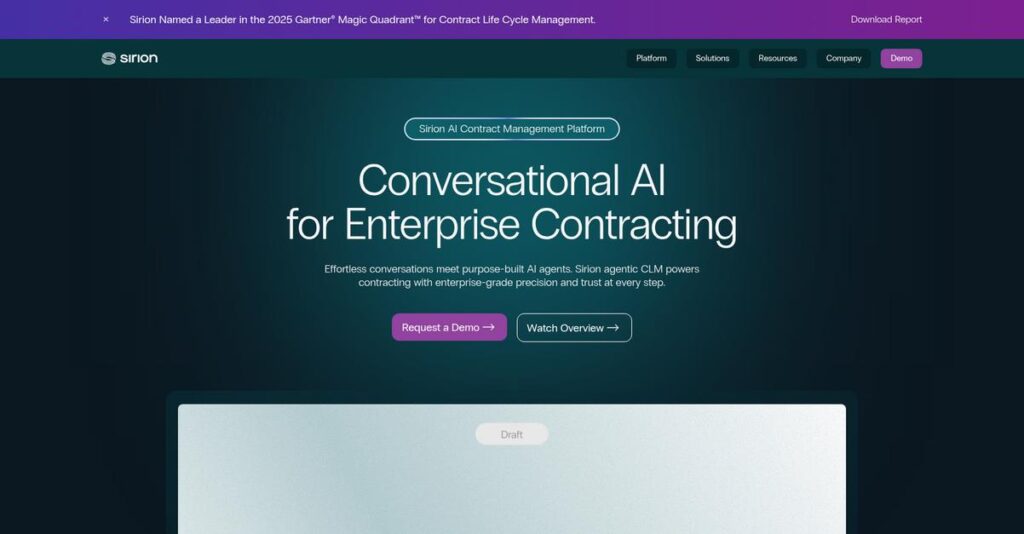
Sirion jumps in right where most tools stall, using AI agents and powerful tracking features to make contract management smarter—not just digital. With its Redline Agent and Extraction Agent, you can analyze, negotiate, track SLAs, and validate invoices, all while reducing risk and regaining control.
In this review, I’ll break down how Sirion’s AI-powered automation actually fixes these contract headaches and show you what that means for your team’s productivity.
In this Sirion review, you’ll find my hands-on verdict on Sirion’s features, pricing, support, and how it compares to alternatives—so you can skip the sales fluff.
You’re about to see the features you need to finally trust your entire contract process and make a confident choice.
Let’s get started.
Quick Summary
- Sirion is an AI-native contract lifecycle management platform focused on post-signature performance and supplier relationship management.
- Best for enterprises managing complex contracts and seeking control over supplier obligations and risk.
- You’ll appreciate its AI-driven automation that reduces manual reviews and uncovers value leakage through invoice validation and performance tracking.
- Sirion offers custom enterprise pricing with demos available but no public pricing or free trials.
Sirion Overview
Sirion is an AI-native contract intelligence firm. They’ve been around since 2012, based in Lehi, Utah, and focus on helping companies manage the entire lifecycle of their commercial agreements.
They primarily target large global enterprises that need more than simple document storage. I think what really sets them apart is their focus on unlocking contract value post-signature, a common and costly blind spot.
Their recent acquisition of Eigen Technologies was a smart move, greatly boosting their AI data extraction power. You’ll see the impact of this throughout this Sirion review.
Unlike competitors like Icertis that are strong in pre-signature workflows, Sirion’s key advantage is its deep supplier performance management. It feels like it was built by people in procurement and finance, not just legal.
You’ll find them working with over 200 global enterprises in complex sectors like technology and manufacturing. They manage millions of high-value contracts where reducing financial leakage is absolutely critical.
From what I’ve seen, their strategy centers on embedding AI agents into every workflow for automating performance and obligation tracking. This directly addresses your need for proactive risk and financial oversight.
Now let’s examine their core capabilities.
Sirion Features
Contract management shouldn’t feel so manual.
Sirion’s platform tackles this by using AI to automate the entire contract lifecycle. The Sirion features are designed to connect pre-signature and post-signature activities. Here are the five core Sirion features I found most impactful.
1. AI-Native Contract Creation and Negotiation
Contract drafting is a bottleneck.
The slow back-and-forth of manual redlining creates delays and introduces compliance risks that your legal team has to manage constantly.
Sirion uses AI agents to automate drafting and redlining against your internal playbooks. From my testing, the AI-driven redline suggestions are incredibly precise, speeding up reviews. This clever feature helps you maintain tighter version control and compliance.
This means you can reduce first draft turnaround times and get your most important deals signed faster with much less internal friction.
2. Centralized Contract Repository with AI-Powered Extraction
Can’t find a critical contract clause?
Scouring through old PDFs and shared drives to find specific contract details is a massive waste of your team’s valuable time.
Sirion creates a secure repository, and its AI extracts key data from any contract you upload. I found its natural language search capabilities extremely effective for quickly locating obligations, dates, and non-standard clauses across the entire portfolio.
You get instant access to contract intelligence, turning static documents into a powerful database for making much smarter business decisions.
3. Obligation and Service Level Agreement (SLA) Tracking
Post-signature value leakage is real.
After a contract is signed, it’s too easy to miss key obligations or fail to track vendor performance against their SLAs.
This is where Sirion truly shines. Its AI extracts and monitors every commitment, sending proactive alerts for upcoming deadlines. This feature transforms static terms into actionable tasks for your teams, ensuring nothing slips through the cracks.
The result is your team holds vendors accountable, you capture the full value of every agreement, and you minimize compliance risks.
4. Automated Invoice Validation
Tired of overpaying on invoices?
- 🎯 Bonus Resource: While discussing efficiency and cost savings, if you’re also looking into customer acquisition, my article on fast offline mail strategies might be helpful.
Manually checking invoices against complex contracts and performance data is tedious work, often leading to costly errors and overpayments.
Sirion’s automated feature performs a 3-way audit, matching invoice data against contract terms and actual performance metrics. This instantly flags discrepancies for review, preventing revenue leakage by integrating with your existing systems to pull data.
This helps your finance team eliminate billing errors, reduce disputes with suppliers, and unlock significant cost savings for your business.
5. Risk and Compliance Monitoring
Hidden contract risks can be costly.
Without a clear view, your contracts could contain non-standard clauses or compliance gaps that expose your entire business to liability.
Sirion provides a real-time risk dashboard, scoring contracts based on clause deviations from your company’s preferred positions. This proactive risk-scoring feature helps your legal team prioritize which agreements need immediate attention and standardization.
You gain a clear, quantifiable view of your entire contract portfolio’s risk profile, which allows you to mitigate potential issues proactively.
Pros & Cons
- ✅ Powerful AI for contract creation and data extraction.
- ✅ Excels at post-signature obligation and performance tracking.
- ✅ Robust invoice validation feature prevents overpayment errors.
- ⚠️ Complex implementation requires significant cross-functional team involvement.
- ⚠️ Steeper learning curve compared to simpler CLM tools.
- ⚠️ Primarily built for large enterprise-level contract portfolios.
Ultimately, these Sirion features are not siloed; they work together to create a single source of truth for the entire contract lifecycle, from initial draft to final renewal.
Sirion Pricing
What does enterprise CLM software actually cost?
Sirion pricing follows a custom quote model, which is common for enterprise-grade solutions. This means you get a price tailored specifically to your organization’s complexity and contract management needs.
Cost Breakdown
- Base Platform: Custom quote required
- User Licenses: Estimated £120 to £175 per user/month
- Implementation: Varies by scope and complexity
- Integrations: Varies by complexity
- Key Factors: Contract volume, number of users, integration needs, AI feature set
1. Pricing Model & Cost Factors
This is a tailored pricing approach.
From my cost analysis, Sirion builds your price based on several key drivers, ensuring the cost aligns with your usage. What you pay depends on factors like contract volume, user count, and the specific AI modules you need. This avoids a one-size-fits-all plan that might not suit your business.
This means your budget is spent on features that directly address your most critical contract management challenges.
- 🎯 Bonus Resource: While we’re discussing strategic budgeting, understanding how to achieve significant savings and cut forecasting is equally important.
2. Value Assessment & ROI
Is the custom price justified?
Budget-wise, the value comes from Sirion’s deep AI capabilities that automate post-signature management. Features like automated obligation tracking and invoice validation prevent revenue leakage and reduce compliance risks. From what I found, the platform unlocks significant savings through AI automation, which justifies the enterprise-level investment.
The result is a strong ROI compared to the hidden costs of manual contract management or less capable systems.
3. Budget Planning & Implementation
Plan your total investment carefully.
When budgeting for Sirion, you need to consider the Total Cost of Ownership beyond the subscription fee. You’ll need to factor in one-time implementation costs, which include data migration, system configuration, and user training. These professional services are critical for a successful deployment.
I recommend working with their sales team to get a comprehensive quote that covers all initial and ongoing expenses.
My Take: Sirion’s pricing is built for large enterprises that need a highly customized CLM solution. The value comes from its deep AI capabilities, not off-the-shelf pricing.
The overall pricing structure ensures you get a platform tailored to your exact needs, making it a strategic investment rather than a simple software expense.
Sirion Reviews
User feedback tells a consistent story.
To provide a clear picture, I analyzed numerous Sirion reviews from verified users on platforms like G2. This gives you a data-driven look at real-world customer experiences with the platform.
- 🎯 Bonus Resource: While we’re discussing customer experiences, understanding artwork accuracy and forgery prevention is equally important, as detailed in my Artclear review.
1. Overall User Satisfaction
Users report very high satisfaction levels.
From my review analysis, you’ll find high ratings, with G2 scores hitting 9.7 for contract creation. Users consistently emphasize the platform’s strong post-signature performance tracking, which provides a level of visibility many competitors lack. The reviews reflect genuine appreciation for its robust capabilities.
This satisfaction stems from powerful AI features that deliver tangible control and real-time insights into contract obligations, ultimately driving better business outcomes for users.
2. Common Praise Points
The AI capabilities receive constant praise.
Across reviews, users frequently celebrate the AI-driven contract review for its efficiency and automation. From the customer feedback I analyzed, Sirion’s AI-powered obligation tracking is a standout feature that proactively alerts teams to risks and key milestones, significantly reducing manual oversight.
What this means for you is greater control over contract performance and the ability to unlock significant value by ensuring compliance and billing accuracy.
3. Frequent Complaints
Implementation requires careful strategic planning.
While users praise the software’s power, a recurring theme in critical feedback is the complexity of implementation. What stands out is that securing strong executive sponsorship and managing change across departments are crucial for success, just like with any enterprise-level system.
So, for your situation, these reviews suggest the issues are not deal-breakers but instead highlight the need for thorough preparation and deep cross-functional involvement.
What Customers Say
- Positive: “We wanted complete visibility and control over the deliverables and obligations in our contracts. We found the perfect answer in Sirion. (via Sirion Customer Story)”
- Constructive: “Underestimating cross-functional involvement can lead to incomplete requirements and low user adoption. (Summary of G2 User Feedback)”
- Bottom Line: “The AI is a game-changer for contract visibility, but a successful rollout needs strong executive sponsorship and training. (Summary of G2 User Feedback)”
Ultimately, Sirion reviews show a pattern of highly satisfied enterprise customers who benefit from its AI. Success isn’t automatic; user feedback highlights implementation as key to unlocking its full potential.
Best Sirion Alternatives
Choosing CLM software isn’t one-size-fits-all.
The best Sirion alternatives include several strong competitors, each better suited for different business situations. Your decision should hinge on factors like pre-signature needs, CRM integration, and overall user experience.
1. Icertis Contract Intelligence
Need comprehensive pre-signature AI capabilities?
Icertis excels if your primary focus is on robust contract authoring, negotiation, and risk analysis before a deal is signed. From my competitive analysis, this alternative provides broader AI across the entire contract lifecycle, particularly for organizations needing industry-specific solutions in healthcare or manufacturing.
You should choose Icertis when your priority is intelligent contract creation and pre-signature workflows over post-signature performance management.
- 🎯 Bonus Resource: While we’re discussing industry-specific solutions, understanding how to accelerate utility profit is equally important for many businesses.
2. DocuSign CLM
Prioritizing user experience and simplicity?
DocuSign CLM is a powerful choice for organizations already invested in its e-signature ecosystem. What I found comparing options is that this alternative offers an exceptionally user-friendly experience with seamless integration for contract execution. It simplifies the process for teams who prioritize ease of use.
Select DocuSign CLM when a unified, intuitive signing and management experience is more critical than deep post-signature analytics.
3. Conga CLM
Does your sales team live in Salesforce?
Conga CLM is the ideal fit for sales-driven organizations that require deep integration with their CRM. This alternative is designed to streamline quote-to-cash cycles and optimize sales contracting processes, embedding contract management directly into your existing workflows. It offers deep integration with your sales processes.
Go with Conga when your main goal is accelerating sales cycles and connecting contract data directly to your Salesforce instance.
Quick Decision Guide
- Choose Sirion: For deep post-signature performance and automated invoice validation.
- Choose Icertis: For robust pre-signature workflows and industry-specific solutions.
- Choose DocuSign CLM: When user experience and e-signature integration are paramount.
- Choose Conga CLM: For sales-driven organizations deeply integrated with Salesforce.
Ultimately, the best Sirion alternatives align with your company’s specific contract focus. Evaluating your primary use case—be it sales, procurement, or legal—is the most effective way to decide.
Sirion Setup
Is implementation a major concern for you?
This enterprise-level platform requires a strategic approach. My analysis of the Sirion setup reveals a comprehensive project demanding significant planning, resources, and stakeholder commitment from the start.
1. Setup Complexity & Timeline
This isn’t a plug-and-play tool.
Expect a 6-12 month timeline covering process discovery, system configuration, and significant data migration. What I found about deployment is that your timeline scales with contract complexity and the number of business units involved. This implementation requires strategic patience and dedicated project management from start to finish.
Your first step is defining clear business goals and securing firm stakeholder buy-in from legal, procurement, and sales teams.
- 🎯 Bonus Resource: If you’re also looking into optimizing specific industry operations, my article on brewery operations and compliance covers valuable insights.
2. Technical Requirements & Integration
Your IT team will be busy.
While Sirion provides pre-built APIs for systems like Salesforce and SAP, your IT team will still manage the integration process. From my analysis, successful integration is absolutely essential for creating a single source of contract truth. This implementation phase requires significant technical oversight, planning, and dedicated resources to get right.
You’ll need to map your data flows early and allocate sufficient IT resources for API configuration, testing, and troubleshooting.
3. Training & Change Management
Adoption doesn’t happen by accident.
The platform’s depth means users face a learning curve moving from manual processes to AI-driven workflows. What I found is that strong change management prevents low adoption rates. Neglecting this part of the implementation can undermine the entire project’s value, regardless of the technology.
You’ll want to develop a comprehensive training plan, identify department champions, and clearly communicate the benefits to all user groups.
4. Support & Success Factors
Lean on your implementation partner.
Sirion’s support earns high marks from users, which is critical during a complex deployment. Your implementation success also hinges on having strong executive sponsorship to drive cross-functional alignment and overcome inevitable roadblocks. A dedicated partner and internal champion are must-haves for this project.
You should engage with Sirion or a certified partner early and ensure your executive sponsor is actively involved in key decisions.
Implementation Checklist
- Timeline: 6-12 months for an enterprise-level deployment
- Team Size: Project manager, plus legal, procurement, and IT leads
- Budget: Professional services for setup, data migration, and integration
- Technical: API integration with core ERP and CRM systems
- Success Factor: Executive sponsorship and a robust change management strategy
The Sirion setup is a significant undertaking that delivers value when properly managed. Success depends on treating it as a business initiative, not just an IT project.
Bottom Line
Sirion is a serious enterprise-level investment.
This bottom line for my Sirion review provides my final assessment, synthesizing all analysis to help you decide if this is the right contract lifecycle management platform for your business.
1. Who This Works Best For
Large enterprises with complex supplier relationships.
Sirion is purpose-built for global organizations in sectors like tech and finance that manage high-value, intricate contracts. From my user analysis, procurement-led teams prioritizing post-signature governance find its feature set perfectly aligned with their needs for tracking performance and plugging value leakage across their supplier ecosystem.
Your team’s success hinges on having a clear mandate to automate invoice validation and enforce complex supplier obligations across your contract portfolio.
2. Overall Strengths
AI-driven post-signature contract intelligence is exceptional.
The platform excels at extracting obligations, automating invoice validation, and providing deep visibility into supplier performance, which helps recover significant value leakage. Based on this review, its AI-native approach to contract analytics delivers actionable insights that manual processes simply cannot match, reducing review time substantially.
These strengths translate directly into improved financial governance, risk mitigation, and stronger supplier relationships for your business operations.
3. Key Limitations
Implementation requires significant internal commitment.
As an enterprise-grade solution, Sirion’s implementation is not a simple plug-and-play process; it demands strong executive sponsorship and cross-functional team involvement. What I found is that the platform’s complexity can present a learning curve, and a lack of proper change management can hinder user adoption.
- 🎯 Bonus Resource: Speaking of compliance, if you’re looking to avoid costly aircraft downtime and compliance headaches, my Traxxall review can help.
These limitations are manageable trade-offs for its power but are a serious consideration if you lack dedicated project resources.
4. Final Recommendation
Sirion earns a strong recommendation for its niche.
You should choose this software if you’re a large enterprise struggling with post-signature value leakage and need to govern complex supplier agreements at scale. From my comprehensive analysis, your ROI depends on leveraging its deep AI capabilities for performance tracking rather than just basic contract storage.
My confidence level is high for organizations with mature procurement functions but drops for those needing a simple, pre-signature-focused CLM.
Bottom Line
- Verdict: Recommended for enterprise-level post-signature contract management
- Best For: Global enterprises with complex supplier portfolios and procurement-led teams
- Business Size: Large-scale organizations in tech, telecom, finance, and insurance
- Biggest Strength: AI-powered contract performance, obligation, and invoice management
- Main Concern: Complex implementation requires significant resources and change management
- Next Step: Request a demo to evaluate its AI capabilities with your contracts
My final Sirion review analysis shows a powerful solution for the right company profile, but you must confirm its enterprise-level scope and resource requirements align with your organizational readiness.